
The Business Centers
A bank feed sees HOME DEPOT $450 and does not say what was bought. Global Office: Sync read every line on the receipt, so each of these six screens is built out of paper you already scanned, with nothing to set up first.
Jobs Center
A job is whatever you type, and the list suggests itself from the jobs already in use. Anything that made you build a list first would be asking you to do paperwork in order to file paperwork.
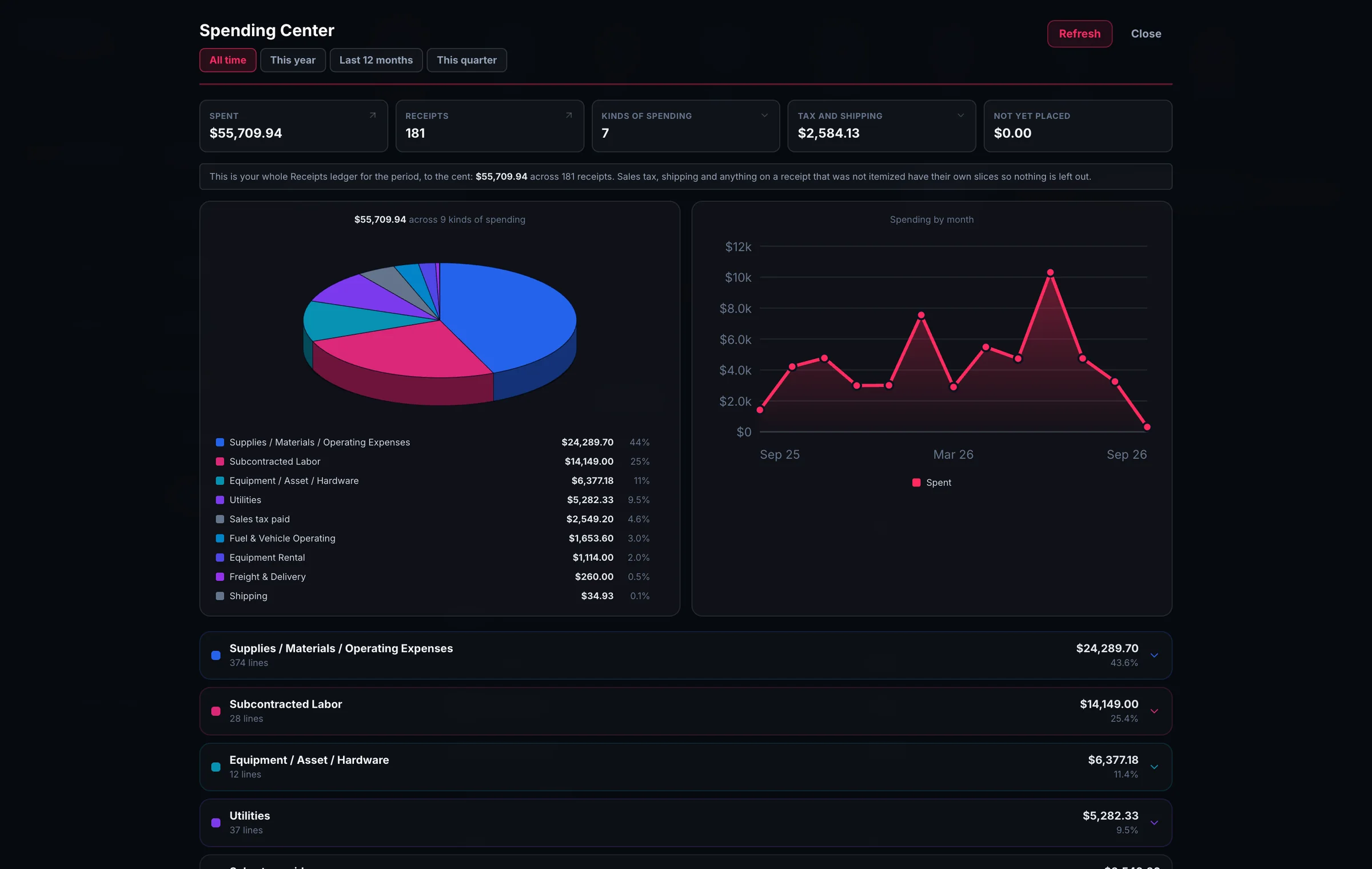
Hardly anyone knows what share of their year rode on their biggest job, because working it out means adding up a year of jobs by hand. One glance at the wheel and you can see it. Eleven percent is one answer. Sixty is a very different one.
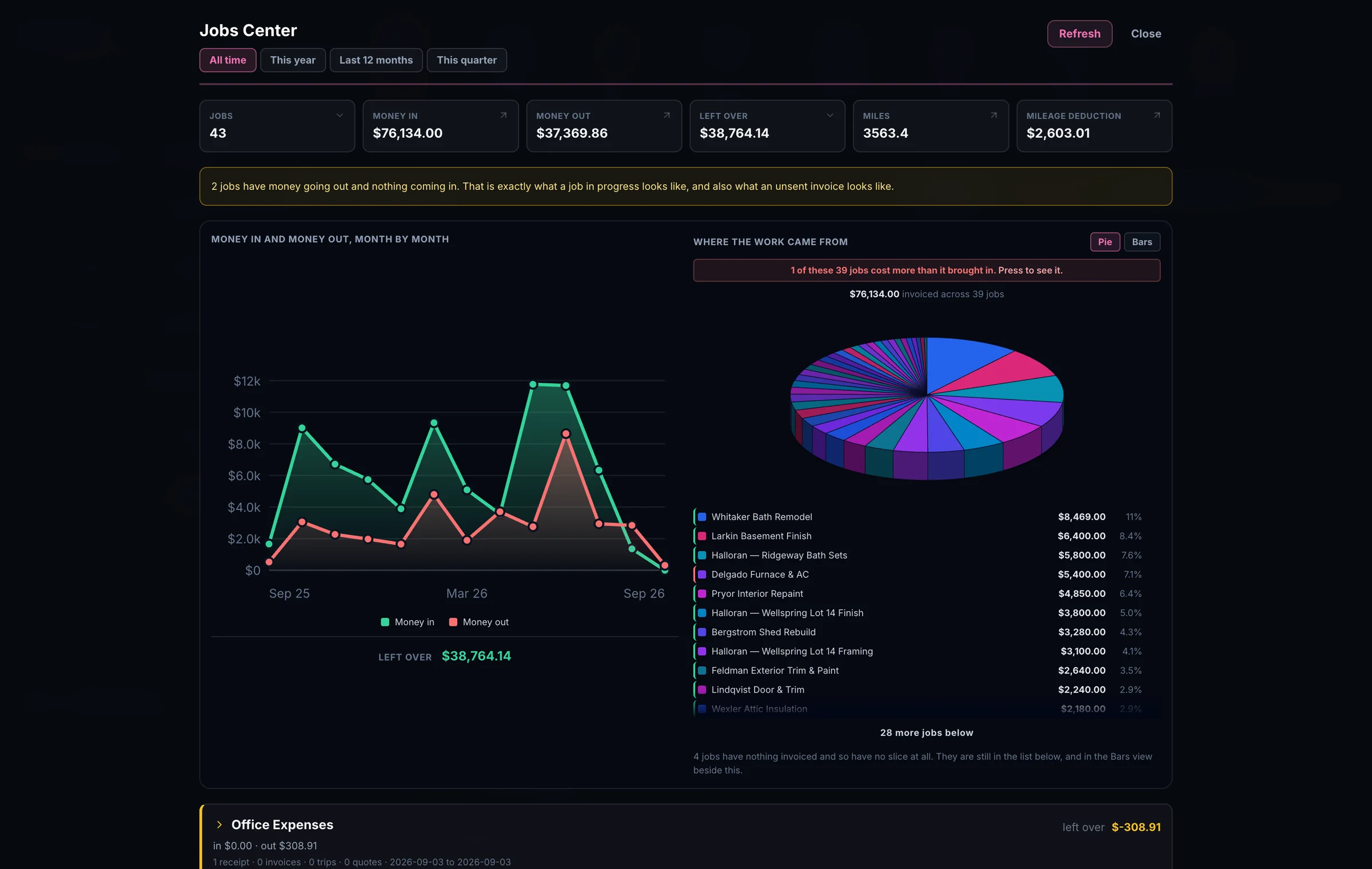
Open one and it shows you. This one invoiced $5,400 and spent $5,788.42 on four suppliers, so it lost $388.42. Nobody was ever going to work that out until the end of the year, and by then it would be too late to price the next one differently.
The invoice, every receipt that went into it, and all six trips are on the same screen, each one still one press from the photograph it came off.
One of these 43 jobs cost more than it brought in. Sync found it from paper you'd already scanned.
Earning Center
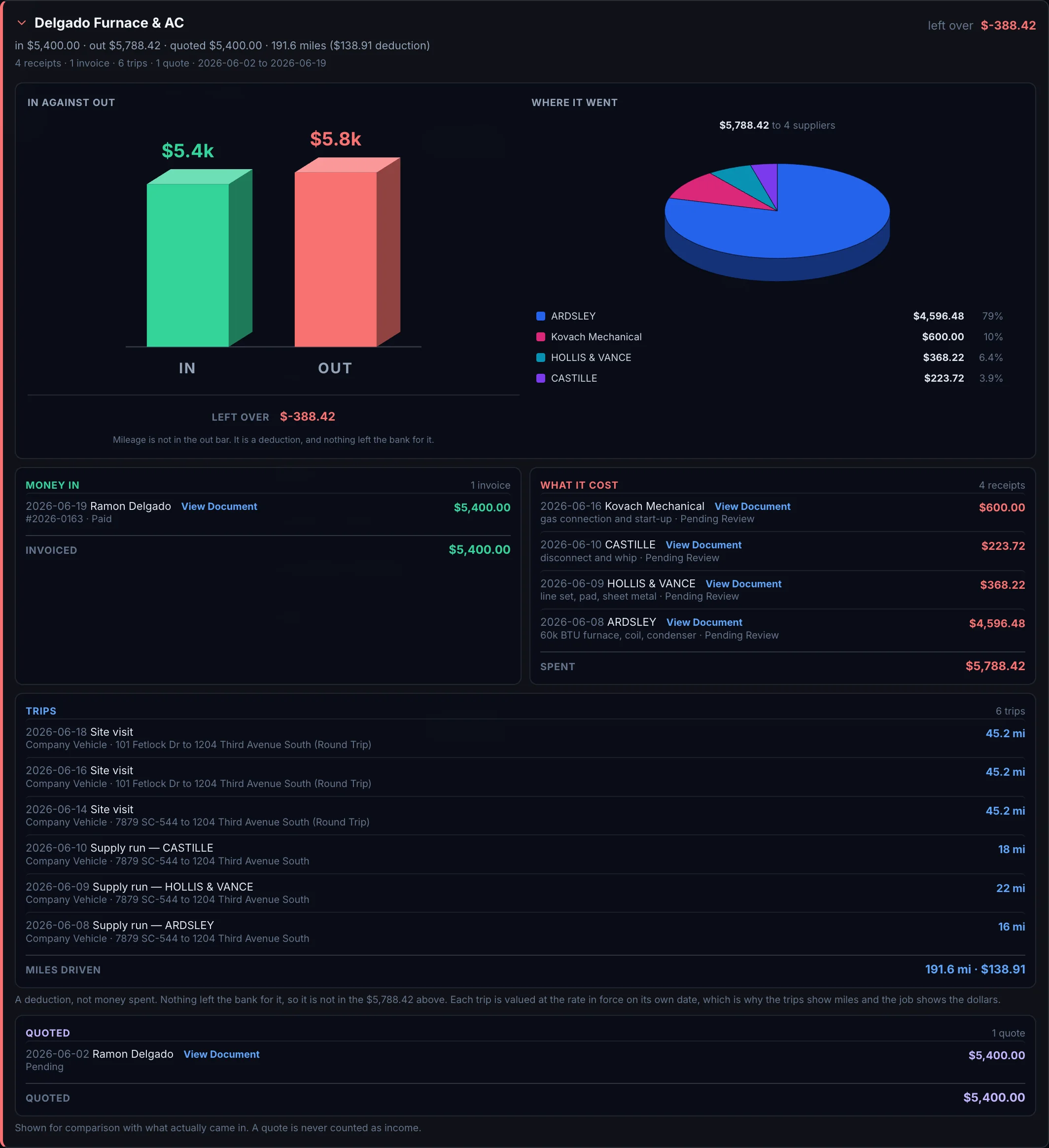
An invoice total doesn't say how much of it was your own time and how much was materials you bought and passed straight through at cost. Global Office: Sync reads every line, so it can.
$65,679 of your own work. $10,455 of materials. That's the number that decides whether you're busy or profitable.
Spending Center
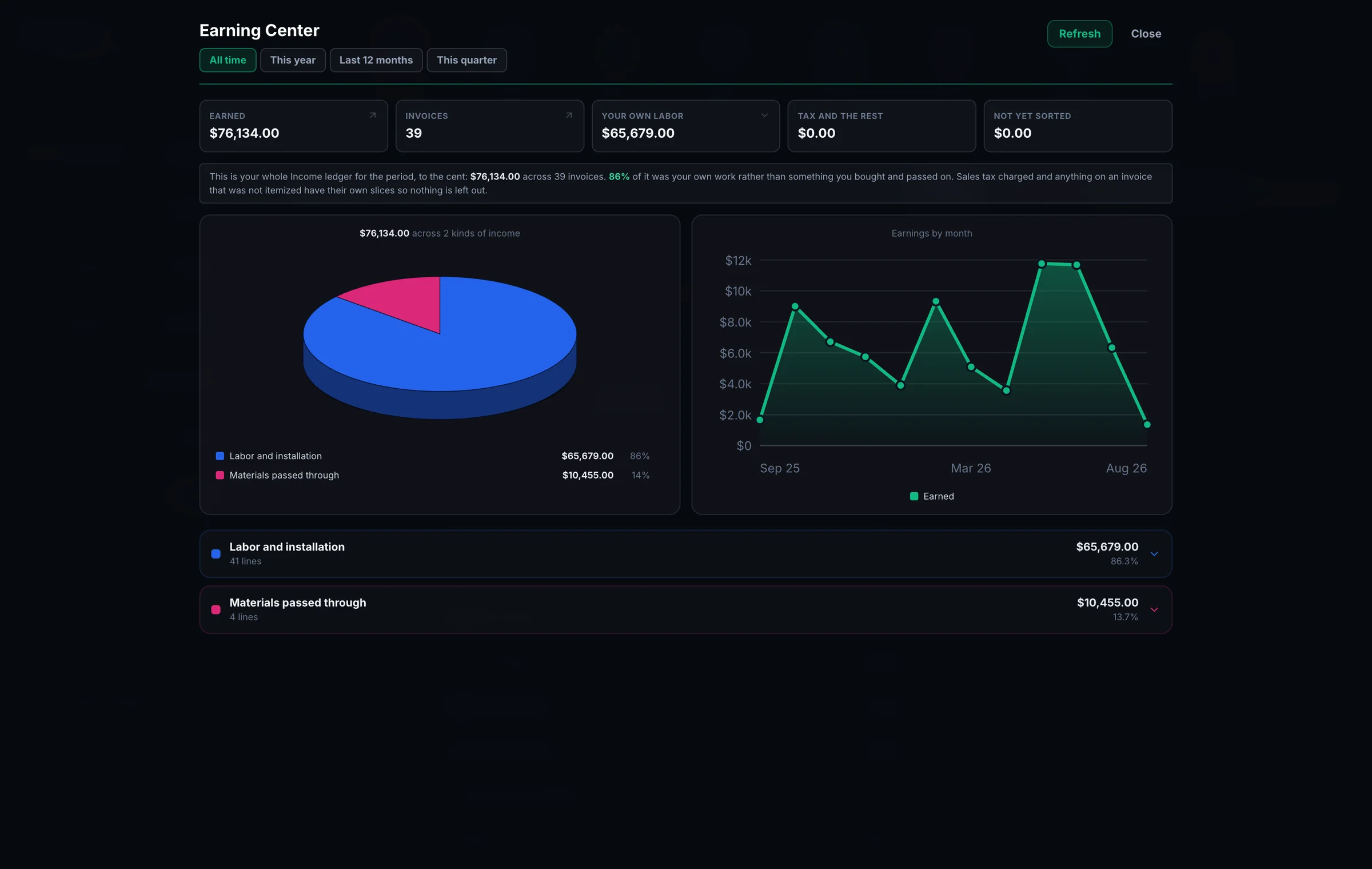
Not which supplier. What the things were. Lumber, roofing, fasteners, subcontracted labor.
Sync already read the lines on your receipts, so there's nothing to set up first.
Price history
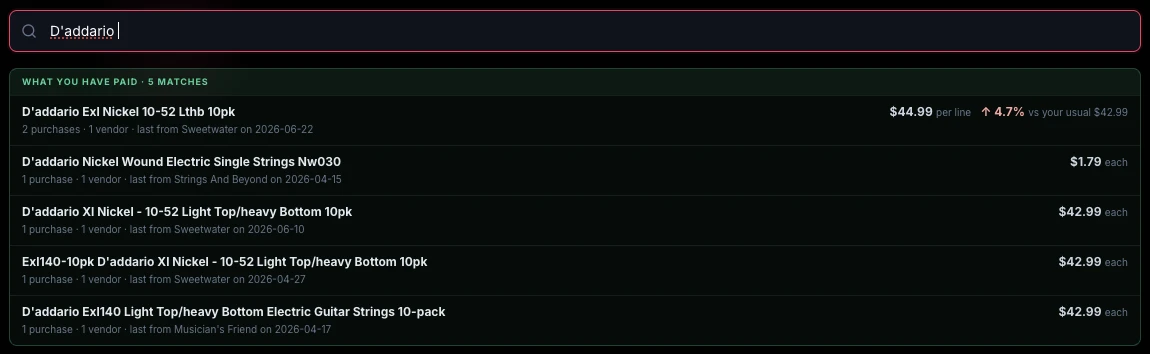
The app knows that because it read your receipts. All of them, down to the line, and it puts the price in front of you while you are searching rather than hiding it behind a menu.
What you last paid for a thing, and where, is not a record of money you already spent. It is the number you need when you are pricing the next job.
Mileage Center
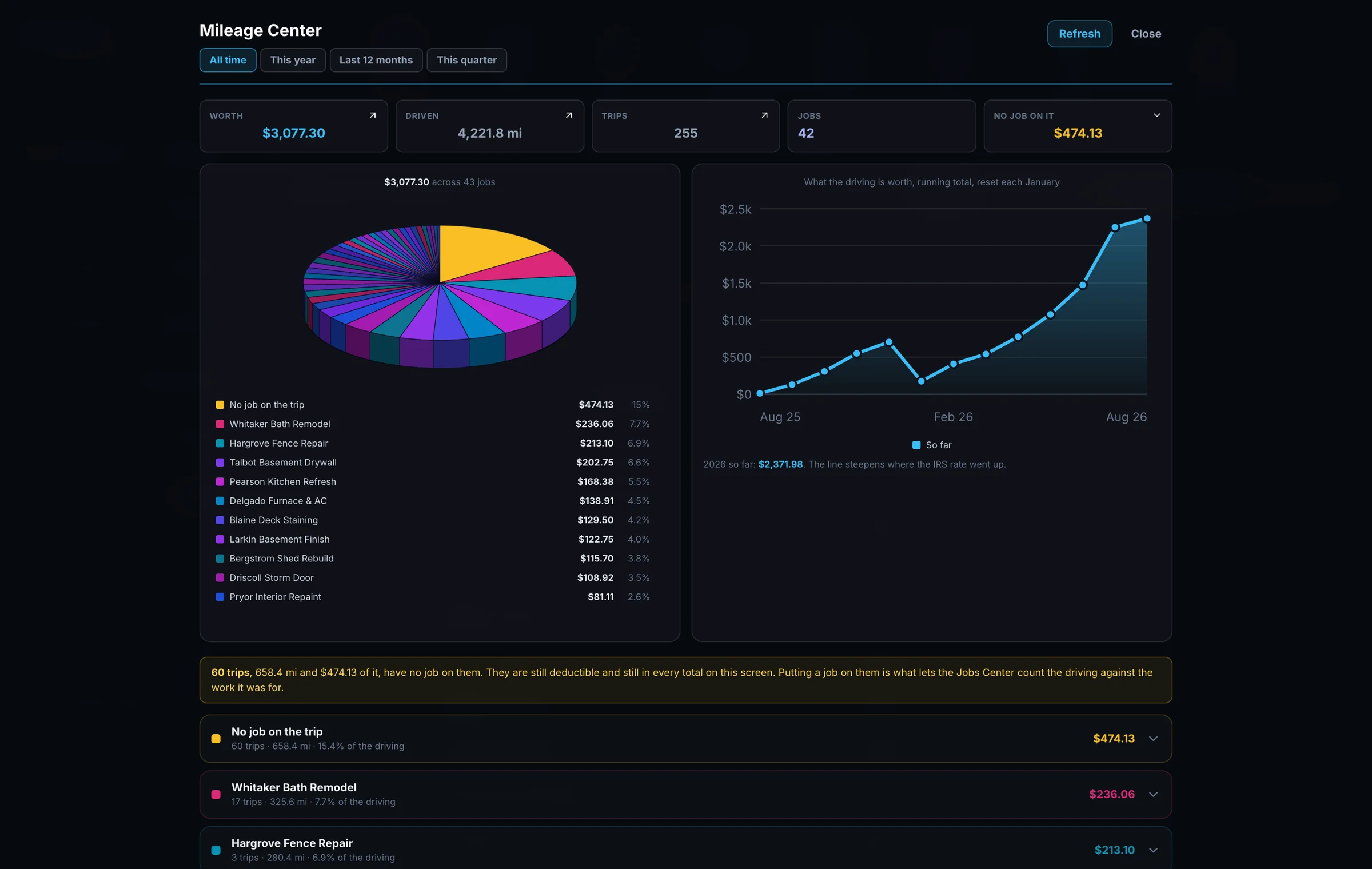
This one tells you what the driving is worth: $3,077.30 across 255 trips and 42 jobs, each one valued at the IRS rate in force on the day it was driven. Not this year's rate. That day's rate.
The running total has a visible kink in it where the IRS moved the rate partway through 2026, which means everybody still using "the 2026 rate" has been wrong for half the year and does not know it.
Bills Center
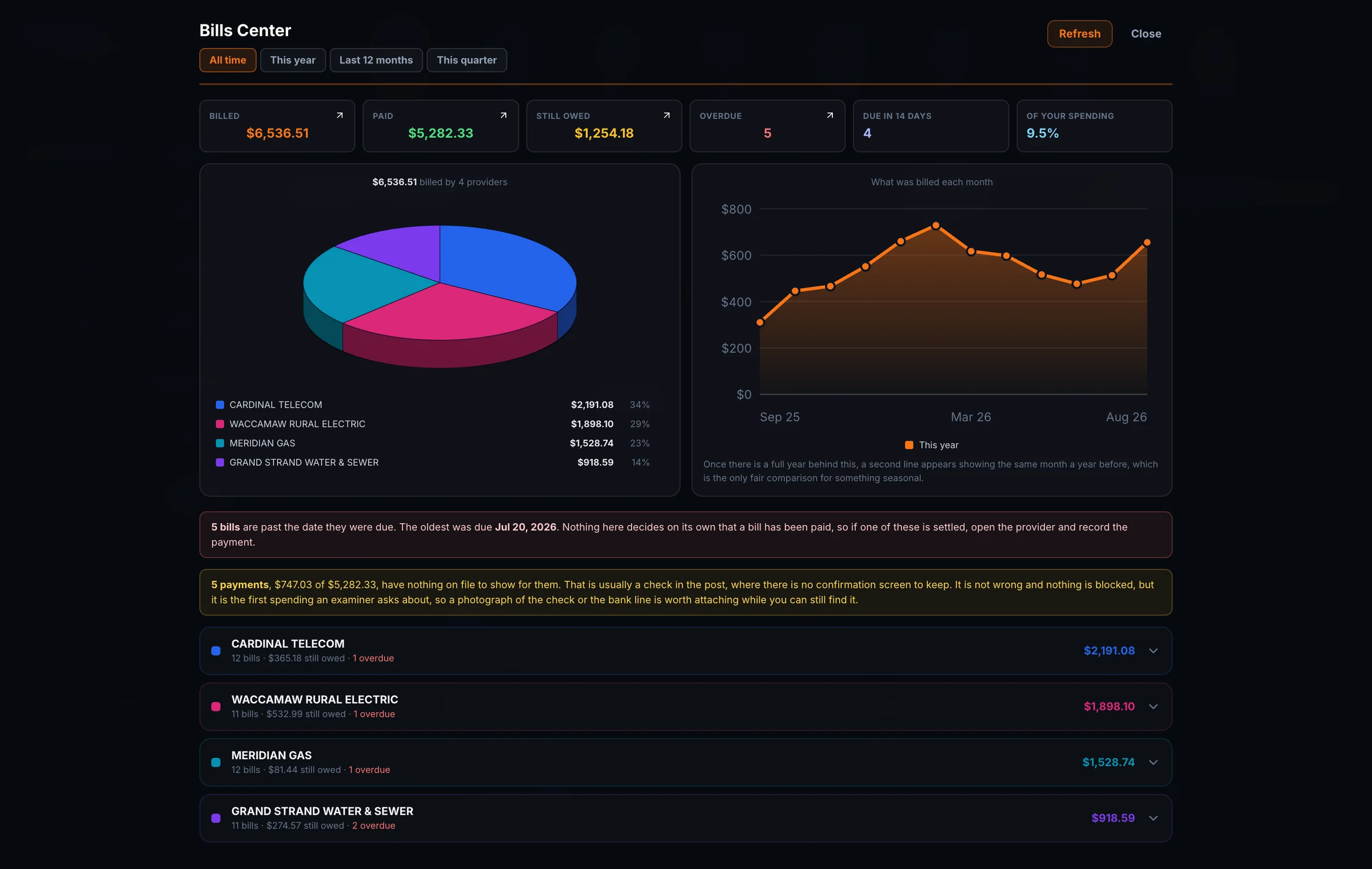
Not a count. A date. Five bills past due and the oldest was due on July 20th, per provider, with what falls due in the next two weeks beside it.
Settle one and record the payment on the same screen. A payment is a real expense here rather than a tick, so a bill can be part paid, paid by two methods, or taken back. It never decides a bill has been paid. Only a person does.
It also tells you that $747.03 of what you have paid has nothing on file to show for it, which is almost always a check in the post, and is the first spending an examiner asks about.
Contact Center
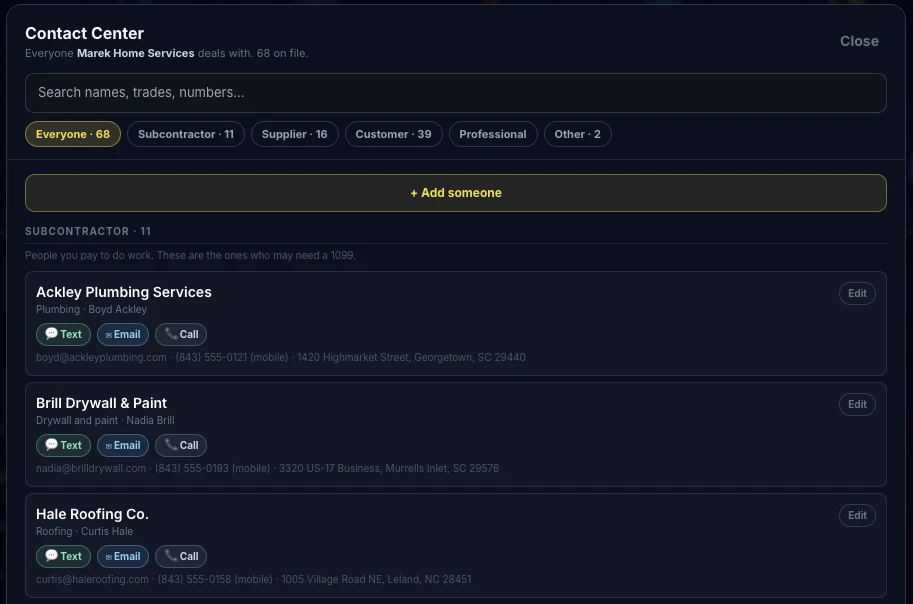
You never built this list. It assembled itself out of the documents you photographed, with the phone number and email you already had for each person, reachable from the record you happen to be looking at.
Which is also what makes the asking work: when a card says a subcontractor's certificate has run out, the Text, Email and Call buttons on it are filled in from here.
Full Edition, Contractor Edition and Solo Edition get all six. None of them are cut down, and all six run on a phone as well as on a desktop.