
If you keep books for other people · Full Edition
A bookkeeper's rate is built on knowing where things go, catching what is wrong, and standing behind the result. None of that is the part that takes the time.
One · See the whole practice
With no client picked, Full Edition opens on the practice. The question you open the app with is what needs you today and whose it is, so that is the first thing on the screen.

What needs attention, across every client. One line per finding, with the client's name on it and the button that deals with it. Press a line and its full card opens in the Information Center, which stays open beside the dashboard.
Where your clients stand. How many need attention, how many have something worth knowing, and how many are all clear. Each is named in words as well as colored red, amber and green, and pressing one lists those clients.
A card for each ledger. The total, the count, and one line in words saying whether the work is up or down on the period before. It counts records rather than dollars, because your week is shaped by three hundred receipts, not by what they add up to.
Every client in one table. What needs attention, receipts, income, past due bills, miles, and the day something was last added, which is the column that tells you who you haven't heard from. Press a client to open their books.
Two · Get the documents in
Global Office: Sync reads receipts, invoices, utility statements, certificates of insurance, 1099s and W-9s, pulls every field, matches line items against that client's own chart of accounts, and proposes the entry. Each document type has its own button and its own reader, because a receipt is not an invoice and an insurance certificate is neither.
Everything you actually bill for, you still do. Everything else stops being yours.
Which means the same fee covers less of your day. Take more clients at that rate, or keep the roster and get the hours back. That's the whole pitch, and it's simple arithmetic.
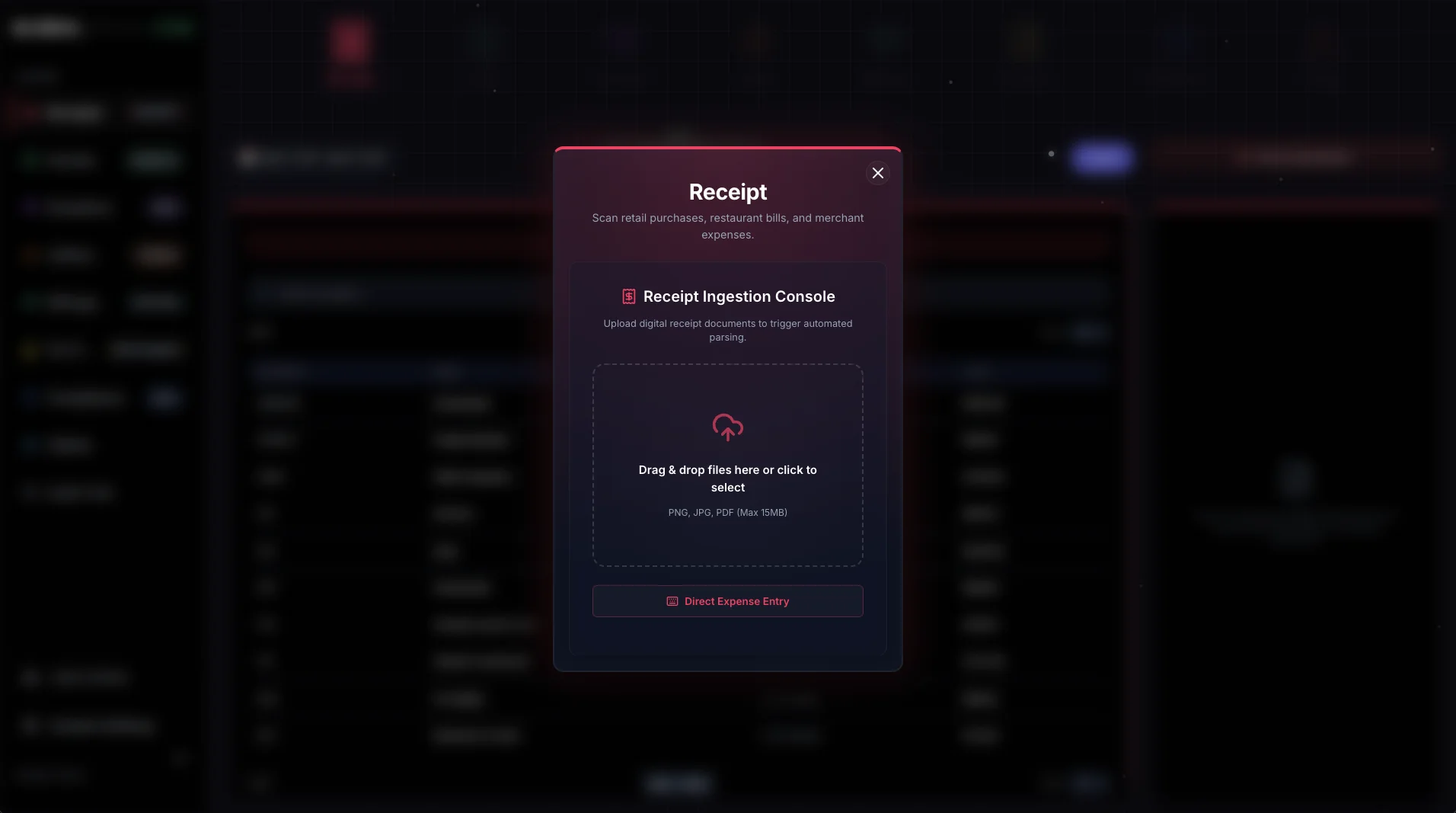
Photograph one document, drop in a PDF, or hand over a folder of hundreds at once. Nothing has to be sorted first, and anything with no paper behind it gets typed straight in.

Your client scans it themselves. A client running Contractor Edition sends their documents to your roster on their own, approved and with the photograph attached. No emailed archives, no "did you get my receipts," no asking twice.
Or you send them a link. For the client who will never use an app, a link they open on their phone. No account, no password, nothing to install. Every hour you have ever spent chasing paper was unbilled.
Two, continued · The client who will not use an app
So there is nothing to log into. Make a link for one client and type what you need. They open it on their phone and add photos or PDFs. Global Office: Sync can send it for you as a finished email with a Send your documents button on it, in your name, and replies come straight back to you.
The message is exactly what you typed, with the link under it. Every link expires, and you can withdraw one at any time.
The client's page says who is asking and what for, and nothing else. It never shows a figure, a document, or anything sent before. A blurry or dark photo is caught right there on their phone, with Retake photo or Use it anyway, before anything goes.
Every document is scanned the moment it arrives, and none of it goes into the books until you have looked at it. Review opens the ordinary review screen, already filled in and already on the right client. Accept it, correct it, or decline it with a reason the client never sees. Once everything sent has been dealt with, the request closes itself.

What it looks like in their hand. One page, one question, a camera button, and a Send button. Nothing to remember and nothing to sign into.

Three · Find what is missing
Global Office: Sync watches every client on the roster, not only the one in front of you. Finding out in August that a certificate lapsed in July is finding out too late. And a utility bill that never arrived has no transaction to notice, so nothing fed by a bank feed will ever mention it.
Four · Resolve it

A finding you cannot act on is just another chore. So the card that tells you a subcontractor has no W-9, or that a certificate has run out, carries the button that asks them for it. Their name, their email and their phone are already filled in out of your client's own paperwork.
And the message is already written, in words that fit the reason: a certificate that expired, one that is about to, one that never covered the work, one reissued with less cover than the last, a 1099 you are getting in order, a quote nobody came back on. It hands the finished thing to your own messages or your own email, so it goes from you rather than from a robot. Change a word of it or send it as it stands.
You do not have to type anything. That matters because chasing paper is the job nobody does until it is too late, and the reason is never that it was hard. It is that it was unpleasant to start.
Five · Review and approve
Global Office: Sync matches line items against that client's actual chart of accounts, with their account numbers intact. Account 090 stays 090. What it cannot place is marked and named, and comes back to you as a question rather than being swept into a catch-all.
Setting up a new client. Pull their chart straight out of their QuickBooks or Xero, upload it, or start from one of six that ship with Sync. You are not retyping somebody's chart of accounts at nine at night ever again.
Neutral about the platform. One client on QuickBooks Online, the next on Xero, the next on FreshBooks. Sync does not care and does not make you keep three habits.
It gets cheaper as it goes. Categorize something once and it stays categorized that way for that client. Month six costs you less time than month one, and across a roster that compounds.
January. You know before December which subcontractors are missing a W-9, which client crossed the threshold and on what date, and which certificates lapsed during the year. 1099 season stops being a scramble because the work was done in March.
Six · Send it to accounting
You see what will go before anything moves. Pick the client and the dates and Global Office: Sync counts it out, ledger by ledger. Open any row and every line item is there with the account it will land in.

Seven · Keep the trail behind it
Every field the scanner proposed and every one you corrected is kept side by side, permanently, with the source document attached. Every entry says which account made it, by name. "I do not know who changed that" is not an answer you should ever have to give a client.
You buy it once and own it. There is nothing to install: it runs in the browser, adds itself to your home screen, and updates itself with no app store in the way.